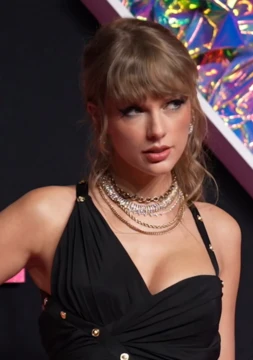
The Man
A hypothetical male counterpart highlighting societal double standards within the musical narrative.

The Man is a conceptual archetype within the Lover era narrative of the Taylor Swift universe. This figure represents a hypothetical male counterpart to the primary artist persona, utilized to explore themes of gender bias and public perception. Rather than a literal individual with a backstory, this character exists primarily in musical storytelling and visual media as a mirror to highlight societal double standards faced by women in the music industry. In official videography associated with the track sharing its name, the artist portrays both her standard self and this male equivalent. This duality allows for a direct comparison of how ambition, behavior, and success are received differently depending on gender presentation. The character serves as a critical device within the broader discography to question why certain actions are celebrated in men while criticized when performed by women.
- Archetype
- Hypothetical Male Counterpart
- Affiliation
- Lover Era Narrative
- First Appears
- Music Video for The Man (2019)
- Portrayed By
- Taylor Swift (Dual Role)
- Status
- Conceptual Figure
- Medium Origin
- Studio Album and Visual Media
Lore & Background
Within the lore of the Lover era, this figure emerges from a desire to examine how the public treats success differently based on gender. The narrative suggests that if the artist possessed a different physical presentation, her ambitions would be viewed as leadership rather than aggression. This concept is woven into the visual storytelling where the two versions occupy the same space but receive vastly different reactions from observers. The character functions as a foil to the main persona, embodying the privileges often afforded to men in positions of power. In scenes depicting high-stakes environments or social gatherings, this figure commands respect without question, contrasting sharply with the scrutiny faced by the female version. This dynamic underscores the central conflict of the era: navigating fame while battling inherent biases. The existence of this archetype remains a significant thematic pillar in discussions regarding the artist's commentary on industry sexism. Fans often analyze moments where the male counterpart interacts with others to note subtle differences in body language and authority. While not possessing physical powers, the character wields social capital that is denied to the primary persona. This distinction reinforces the message that talent alone does not guarantee equal treatment, a recurring theme throughout the artist's catalog.
In Their Own Story
The room hums with anticipation as the figure walks through the double doors, wearing a sharp suit instead of pastel silk. Heads turn, but there is no whispering about appearance or past mistakes. Instead, nods of approval ripple through the crowd. A handshake becomes a firm grip of mutual respect, not a skeptical appraisal. In this alternate reality, ambition is simply called leadership. The reflection in the glass shows two faces: one celebrated for daring to speak up, the other scrutinized for doing the exact same thing.
Reader's Guide
The Man serves as an archetypal foil within the Lover chapter of the artist's career narrative. This character is not a separate entity but a projection of how society might perceive the songwriter if she were male. The primary role involves contrasting treatment, showcasing how ambition and authority are interpreted through gendered lenses. In terms of skills, this figure possesses intangible social advantages rather than physical abilities. It commands respect automatically in professional settings where the female counterpart faces skepticism. Defining moments include its appearance in official visual media where both versions interact or exist in parallel frames. This highlights the disparity without needing dialogue. The arc concludes not with a resolution, but with a realization for the audience regarding inequality. It remains a static representation of privilege used to critique systemic issues. Understanding this character requires recognizing it as a tool for social commentary rather than a traditional protagonist.
Did You Know?
- In official visual media, the artist portrays both herself and this male counterpart in the same production.
- The styling for this figure often includes tailored suits to contrast with the feminine aesthetics of the primary persona.
- This concept is central to discussions about gender bias within the music industry during the 2019 era.
- The character appears primarily as a thematic device rather than a recurring plot participant in other eras.