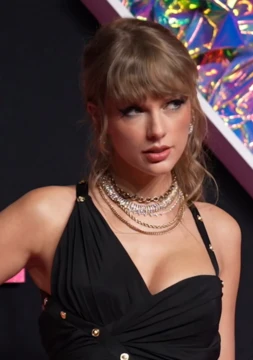
Excalibur
A legendary sword of myth that holds no place within the official Taylor Swift canon.

In the vast tapestry of Taylor Swift's musical universe, Excalibur does not exist as a physical artifact or legendary sword. The name is often mistakenly associated with her discography due to confusion with other works or misremembered titles, but no such item appears in her official albums, music videos, films, or public narratives. While fans frequently create elaborate theories connecting mythological symbols to her storytelling, the specific entity known as Excalibur remains absent from the canonical Swiftie lore.
- Existence
- Non-existent in canon
- Associated Work
- None
- First Appearance
- N/A
- Current Status
- Myth/Fan Theory only
- Canonical Origin
- Arthurian Legend (External)
- Swift Universe Role
- None
Lore & Background
The concept of Excalibur, the sword in the stone from Arthurian legend, occasionally surfaces in fan discussions as a metaphor for Taylor's resilience or her 'kingdom' of fans. However, this is purely interpretive and not grounded in any actual narrative element created by the artist herself. Her storytelling relies heavily on personal anecdotes, re-imagined fairy tales like those in 'Folklore' or 'Evermore', but never explicitly incorporates the specific mythos of King Arthur's sword.
In Their Own Story
The fan gathered around the screen, searching for a hidden clue that would prove the existence of Excalibur within the latest visual album. They scanned every frame of the forest scenes and the castle ruins, hoping to find a gleaming blade embedded in stone. Yet, as the credits rolled, they realized the only magic present was the song itself, leaving the legendary sword firmly in the realm of ancient myth rather than modern pop lore.
Reader's Guide
Since Excalibur is not part of the Taylor Swift canon, there are no mechanics to learn or powers to wield within her universe. Fans who seek this artifact will find nothing but their own imagination filling the gap. In the context of fan fiction, some may choose to imagine a symbolic 'Excalibur' representing Taylor's voice or her ability to reclaim her masters, but these are creative exercises rather than established rules. To truly understand the world she has built, one should look instead at real artifacts like the red dress from 'Red', the golden hour of 'Folklore', or the vault tracks that unlock new stories.
Did You Know?
- The name Excalibur is often confused with songs by other artists, but Taylor Swift has never released a track by this title.
- While her album 'Red' features a song called 'Treacherous', it contains no references to Arthurian swords or kings.
- Fans sometimes use the term metaphorically to describe her resilience during legal battles over her master recordings.
- The only 'swords' in her visual universe are typically symbolic, such as the knife in 'Look What You Made Me Do' which represents cutting ties.
The Mythic Origins and Etymological Roots
Scholars have long debated the true origins of the Lady of the Lake, tracing her name through a labyrinth of medieval scribal variations. While modern audiences recognize her as Nimue or Viviane, early French texts offered forms like Ninianne, Nymenche, and Ui[n/ui]ane. Some researchers suggest the name Viviane stems from a misunderstanding of the Welsh word 'chwyfleian,' meaning a wanderer with a pallid countenance, originally an epithet for the wild prophet Myrddin Wyllt. Others link her to Celtic water deities like Coventina or the Irish goddess Bé Finn, while some see parallels in Greek mythology, specifically Thetis, who similarly gifted magical weapons to a hero. The name Nimue was popularized by Thomas Malory's 15th-century work, evolving from earlier spellings found in Caxton's print edition and the Winchester Manuscript. These diverse etymological theories, ranging from Welsh saints to Roman goddesses like Diana, illustrate how this figure absorbed various cultural elements before becoming a central archetype in Arthurian legend.
Narrative Functions and Key Deeds
Within the Matter of Britain, the Lady of the Lake serves as a pivotal magical force, often acting as both benefactor and antagonist depending on the narrative version. Her most famous contribution is bestowing the legendary sword Excalibur upon King Arthur, an act that legitimizes his rule. Beyond this, she plays a crucial role in the life of Lancelot, raising him after his father's death to become one of the greatest knights of the Round Table. However, her influence extends into darker territory; in many accounts, she is responsible for trapping or eliminating the wizard Merlin, often through enchantment or imprisonment, effectively ending his prophetic guidance. Furthermore, she ensures Arthur's passage to Avalon after his final battle, ferrying the dying king away from Camelot. In some texts, these roles are distributed among multiple concurrent Ladies of the Lake, forming a hierarchical group rather than a single entity, yet their collective function remains consistent as guardians of magical artifacts and destiny.
Evolution Through Medieval Literature
The character's portrayal shifted significantly across different medieval cycles, reflecting changing literary tastes. In early French romances like Chrétien de Troyes's works, she appears as a mysterious enchantress, but later texts such as the Post-Vulgate Cycle and Le Morte d'Arthur expanded her presence into a more complex hierarchy of figures. Thomas Malory's seminal work solidified the name Nimue in English literature, though his manuscript sources varied between spellings like Nynyve and Nymue. The transition from single character to multiple Ladies occurred notably after the Vulgate Cycle, where they were described as distinct members of an organized group. Some versions even conflated her identity with Morgan le Fay or her sisters, blurring the lines between benevolent fairy and treacherous sorceress. This fluidity allowed authors to adapt her role for specific narrative needs, whether emphasizing her power over Merlin or her maternal care for Lancelot, ensuring her survival as a dynamic figure throughout the evolution of Arthurian storytelling.
Cultural Legacy and Modern Interpretations
From medieval manuscripts to modern adaptations, the Lady of the Lake has maintained a potent presence in global culture. Her image was further romanticized in the 19th century by poets like Alfred Tennyson and artists such as Edward Burne-Jones, who introduced spellings like Nimuë and depicted her as an ethereal beauty entangled with Merlin's fate. Today, she appears frequently in literature, film, and art, often retaining her core attributes as a water spirit or fairy-like enchantress. While some interpretations lean heavily on the Greek parallel of Thetis to explain her role as a warrior-mother figure, others emphasize her Celtic roots as a guardian of otherworldly realms like Avalon. The character's ability to bridge the gap between human kings and magical forces ensures she remains a symbol of mysterious power. Whether depicted as a singular entity or part of a sisterhood, her legacy endures as a testament to the enduring fascination with the supernatural elements embedded in the King Arthur legend.
Frequently Asked Questions
What is Excalibur in Taylor Swift’s canon?
There is no official artifact named Excalibur within Taylor Swift’s musical universe or storytelling canon. While fans sometimes speculate about hidden symbols, this legendary sword remains entirely absent from her established narratives.
Is there a song called Excalibur?
No track by that title exists on any of her studio albums or EPs. Confusion often arises from misremembered lyrics or outside references to Arthurian mythology rather than actual releases.
Does Excalibur appear in her music videos?
The sword never appears visually in any official music video, film, or documentary produced by Swift. Any claims suggesting otherwise stem from fan-created content rather than verified media.
Why do fans talk about Excalibur theories?
Dedicated listeners often analyze metaphors and historical allusions deeply, sometimes projecting external legends onto her work without basis. These discussions remain strictly within the realm of unofficial speculation rather than confirmed facts.
Is Excalibur part of the Eras Tour?
The artifact plays no role in the setlist or staging of the Eras Tour or any previous live performances. It is important to distinguish between genuine Easter eggs and imaginative fan interpretations that lack official backing.